Direct answer
Non-accredited investors are not automatically excluded from every private raise.
Many founders hear "private offering" and assume the investor list must be accredited-only. That is common, but it is not the only Rule 506(b) structure. Under federal Regulation D, a Rule 506(b) offering can include accredited investors and a limited number of non-accredited investors when the company and counsel can document the investor count, sophistication basis, required disclosures, and private-offering status.
The practical reason teams avoid non-accredited investors is not that they are impossible to include. It is that the closing record becomes heavier: investor sophistication, purchaser representative support when needed, extra disclosure material, delivery proof, Q&A, signatures, filing tasks, and closing records all need to be captured before closing.
Rule 506(b) requirements
Including non-accredited investors depends on four requirements.
Up to 35 non-accredited investors
Rule 506(b) can include non-accredited purchasers, but the federal safe harbor limits that group to no more than 35 purchasers in any 90-calendar-day period, using the Rule 501(e) counting rules.
Sophistication must be documented
Each non-accredited purchaser must be able to evaluate the merits and risks of the investment, either alone or with a purchaser representative.
More disclosure is required
If non-accredited investors participate, the issuer must prepare and deliver additional information before sale, including specified financial statement information.
No public advertising
Rule 506(b) prohibits general solicitation and general advertising. Investor outreach should stay private and counsel-reviewed.
506(b) versus 506(c)
Rule 506(b) and Rule 506(c) have different advertising rules.
Rule 506(c) permits general solicitation, but purchasers in a 506(c) offering must be accredited investors and the issuer must take reasonable verification steps. Rule 506(b) can include non-accredited investors, but it does not allow public advertising.
What to prepare
If you include non-accredited investors, the evidence record matters.
OfferingOS is built around document and investor administration for counsel-reviewed offerings. You collect files, invite counsel, finance leads, and investors, track questionnaires, document delivery, signatures, filing tasks, and funds status, and preserve the final record in one place.
OfferingOS workspace
You can prepare the Rule 506(b) package without scattering the closing record across email and folders.
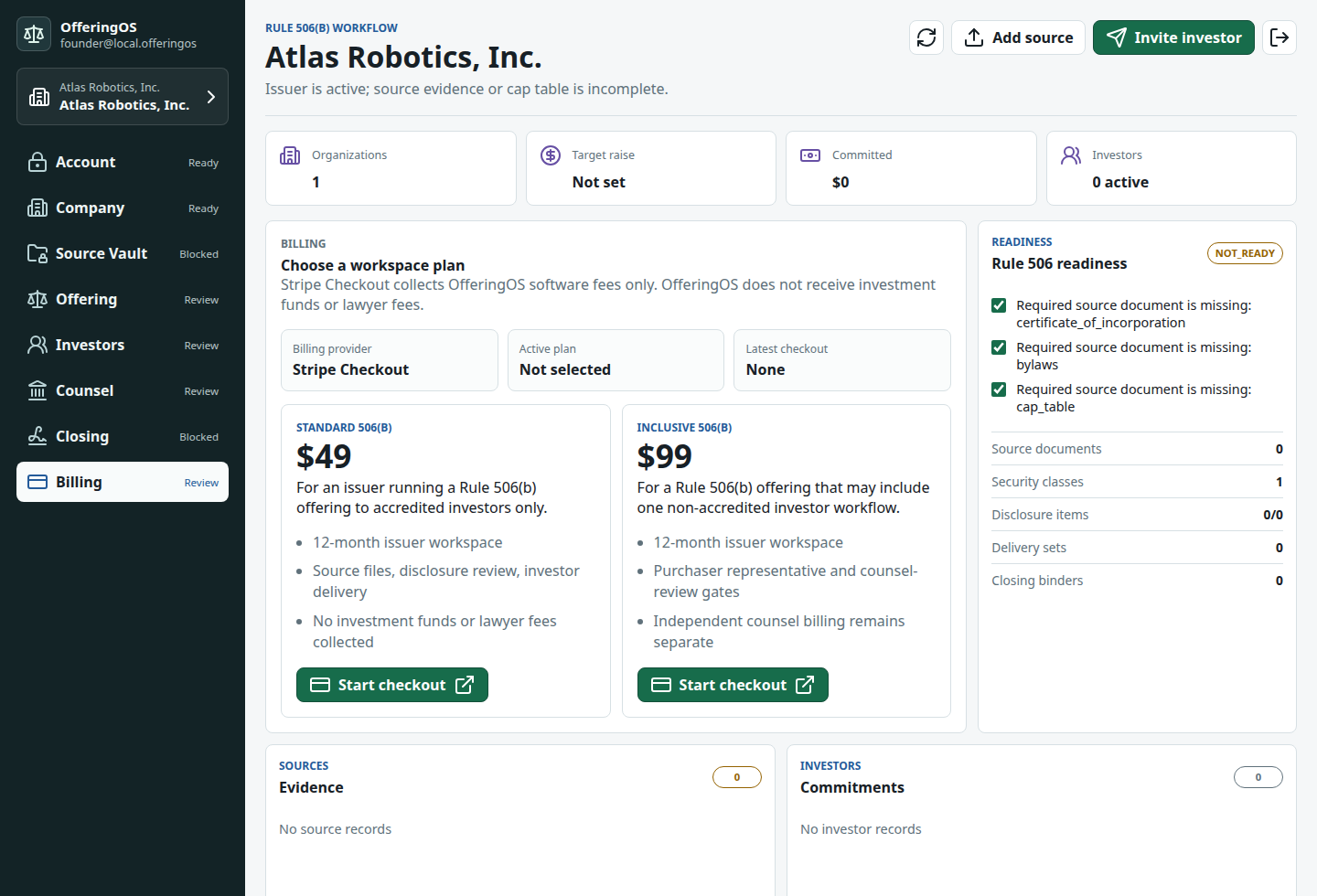
The workspace brings company records, offering terms, investor intake, disclosure review, document delivery, signatures, filing tasks, funds status, and binder exports into a single reviewed record.
FAQ
Common questions about Rule 506(b) and non-accredited investors.
Can a private company raise money from non-accredited investors under Rule 506(b)?
Yes. A Rule 506(b) private offering may include non-accredited investors if the issuer satisfies the investor-count, sophistication, disclosure, and no-advertising requirements.
How many non-accredited investors can participate in a Rule 506(b) offering?
The SEC describes Rule 506(b) as allowing an unlimited number of accredited investors and no more than 35 non-accredited investors. The rule text frames the purchaser limit as no more than 35 purchasers in any 90-calendar-day period, with purchaser-counting rules in Rule 501(e).
Does a non-accredited investor need to be sophisticated?
Yes. A non-accredited purchaser must have enough financial and business knowledge to evaluate the merits and risks of the investment, either alone or with a purchaser representative, or the issuer must reasonably believe that standard is met before sale.
Can a Rule 506(b) offering be advertised publicly?
No. Rule 506(b) does not allow general solicitation or general advertising. Rule 506(c) is the Regulation D exemption that permits public solicitation, but all purchasers in a 506(c) offering must be accredited investors and the issuer must verify that status.
What does OfferingOS help prepare for this kind of raise?
OfferingOS gives the issuer and counsel a workspace for source files, offering terms, investor intake, disclosure review, document delivery, signatures, filing tasks, funds status, and the closing binder.
Primary sources
Sources used for this guide.
Prepare the record