Direct answer
A friends-and-family round is still a securities offering.
The phrase "friends and family" describes who the investors are, not the legal exemption for the raise. The SEC explains that every offer and sale of securities, even to friends and family, must be registered or meet an exemption from registration.
That means the company should formalize the round before accepting funds: choose the exemption with counsel, set the terms, confirm who can invest, deliver required information, collect signatures, track funds status, prepare filings, and keep a closing record that can be reviewed later.
What to do first
Formalization starts before you send subscription documents.
Choose the exemption before you ask for checks
A friends-and-family label does not create a securities exemption. You and counsel still need to decide how the offering will qualify before anyone invests.
Keep outreach private when using Rule 506(b)
For a Rule 506(b) raise, keep investor communications limited to private, relationship-based outreach and avoid public advertising.
Record investor status and relationship context
Capture each investor's accreditation status, relationship to the company, sophistication basis, purchaser representative details when used, and commitment amount.
Deliver the right documents before sale
If non-accredited investors participate, prepare the required disclosure package, financial statement support, Q&A record, resale notices, and delivery evidence.
Informal versus formal
The risk is not that the check comes from someone close to you. The risk is missing the offering record.
A relationship can explain why an investor knows you. It does not document the exemption, the investor's status, the materials delivered, the questions answered, or the securities issued.
What to capture
Your future seed round, audit, acquisition, or investor dispute will ask for the same basic record.
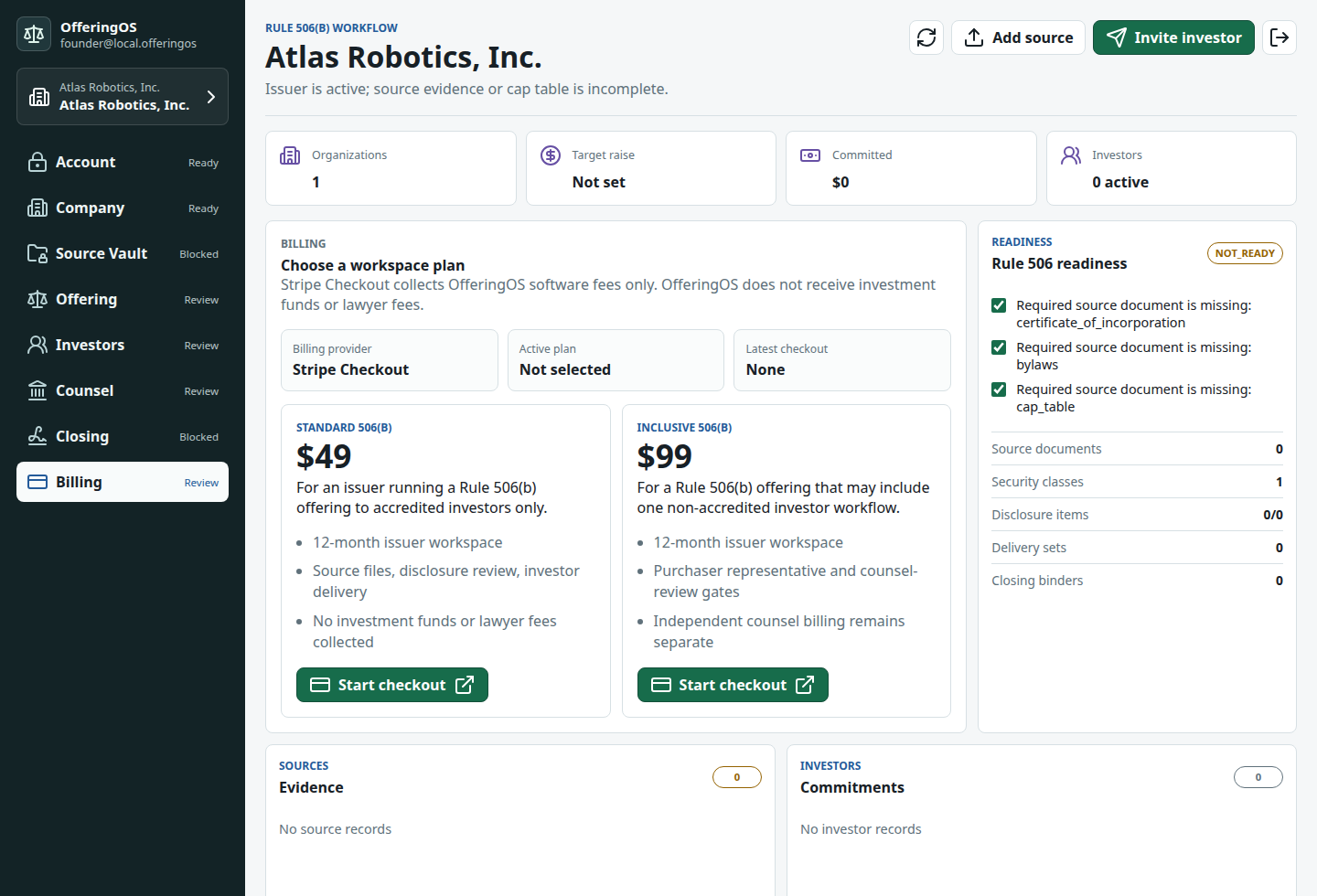
OfferingOS gives you one workspace for the parts of a friends-and-family raise that are easy to scatter across inboxes, folders, spreadsheets, and payment notes.
OfferingOS workspace
You can run the round as a private offering record, not a pile of promises and PDFs.
Prepare issuer facts, upload source files, configure terms, invite investors, document review, track signatures and funds status, prepare filing tasks, and export the closing binder.
FAQ
Common questions about formalizing a friends-and-family raise.
Is a friends-and-family round exempt just because the investors know the founder?
No. The SEC explains that every offer and sale of securities, even to friends and family, must be registered or fit within an exemption from registration.
Can friends and family investors be non-accredited?
Possibly. Rule 506(b) can include non-accredited investors, but the offering must meet investor-count, sophistication, disclosure, and no-advertising requirements. Counsel should review the structure before the company accepts money.
What changes when a friends-and-family investor is non-accredited?
The record becomes heavier. The company needs to document sophistication or purchaser representative support and furnish specified disclosure information a reasonable time before sale.
Can I announce a Rule 506(b) friends-and-family round on a public website?
No. Rule 506(b) prohibits general solicitation and general advertising. Public promotion belongs to a different exemption strategy, such as Rule 506(c), where all purchasers must be accredited investors and accreditation must be verified.
What does OfferingOS help me produce?
OfferingOS gives you a workspace for issuer facts, source files, offering terms, investor intake, disclosure review, document delivery, signatures, funds status, filing tasks, and the closing binder.
Primary sources
Sources used for this guide.
Build the record