Direct answer
Do not treat Form D as the first step.
Form D is a notice for a securities offering that is relying on an exemption from SEC registration. For a Regulation D offering, the SEC says the notice is due no later than 15 days after the first sale of securities in the offering.
The first sale is not the date you start drafting. The SEC's Form D FAQ describes it as the date when the first investor is irrevocably contractually committed to invest. That means the company should have the exemption, outreach record, investor records, disclosure delivery, signatures, funds status, and filing facts organized before that commitment happens.
Pre-filing checklist
Prepare the raise before the first investor becomes committed.
Choose the exemption before anyone commits
Form D is a notice filing for an exempt offering. Decide whether the raise is Rule 506(b), Rule 506(c), or another exemption before you ask investors to sign.
Keep Rule 506(b) outreach private
If you use Rule 506(b), do not promote the round publicly. Keep outreach limited to private, relationship-based communications reviewed with counsel.
Collect investor facts before subscription documents
Record each investor's legal name, residence, accreditation status, sophistication basis, representative details when used, and commitment amount.
Prepare disclosures before the first sale
If non-accredited investors may participate, prepare the required disclosure package, financial statement support, Q&A record, and proof of delivery before sale.
Timing
The useful work happens before the filing clock starts.
Form D becomes urgent after the first sale, but the facts needed for the filing and closing record are created earlier. A company that waits until the filing deadline to assemble those facts is already behind.
What to capture
Your Form D filing is only one item in the private offering record.
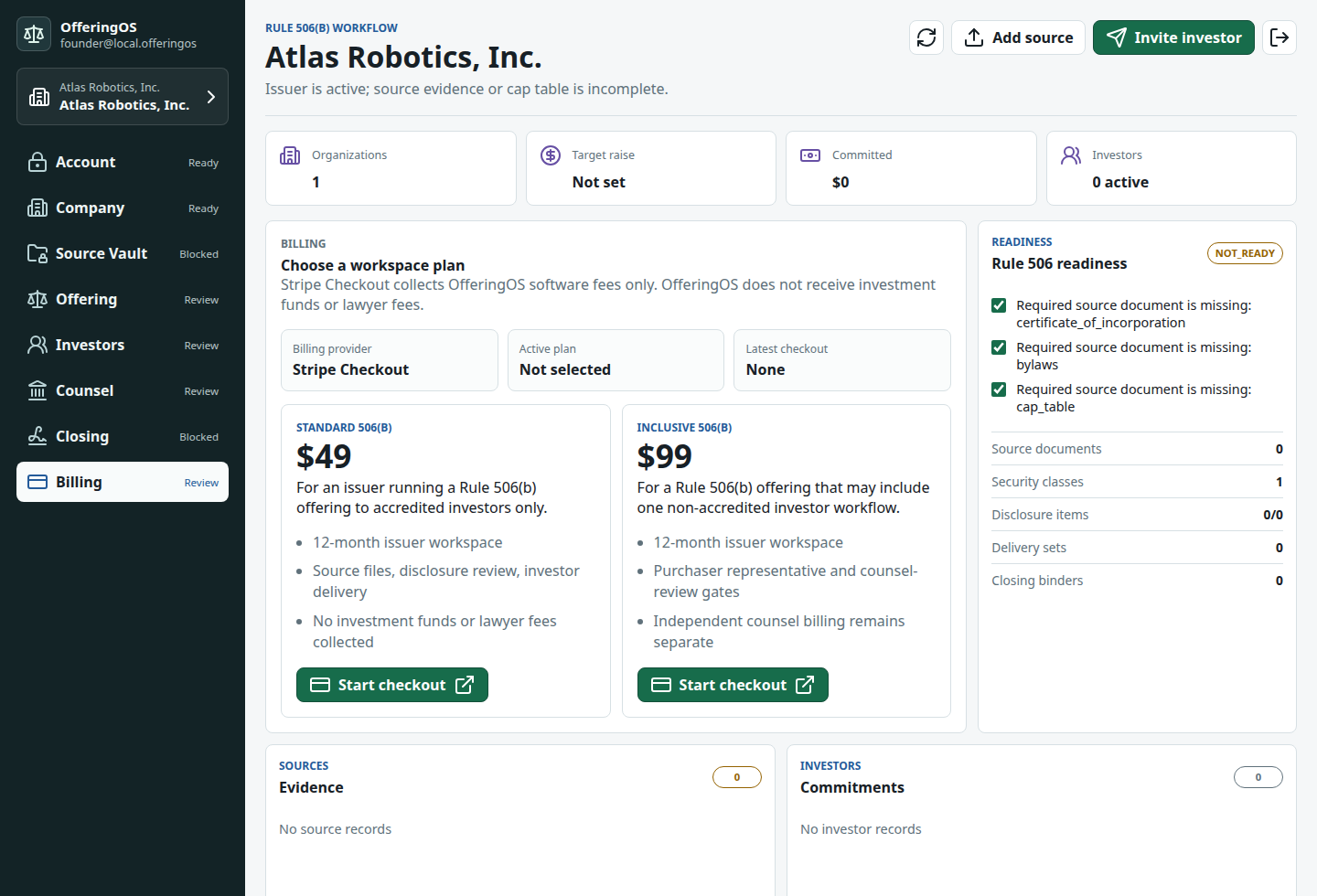
OfferingOS gives you a workspace for the records founders usually scatter across inboxes, folders, spreadsheets, signature tools, counsel comments, and payment notes.
OfferingOS workspace
You can prepare the offering record before the Form D deadline exists.
Create the company profile, upload source files, set the offering terms, collect investor facts, deliver approved documents, track signatures and funds status, prepare filing tasks, and export the closing binder.
FAQ
Common questions before filing Form D.
Is Form D filed before a Regulation D raise starts?
Usually no. The SEC describes Form D as a notice that must be filed no later than 15 days after the first sale of securities in the offering. The planning work should happen before that sale.
What counts as the first sale for Form D timing?
The SEC's Form D FAQ says the date of first sale is the date when the first investor is irrevocably contractually committed to invest. That date starts the Form D deadline.
Does filing Form D make the offering compliant?
No. Form D is a notice. The company still needs to satisfy the exemption's conditions, including investor eligibility, disclosure, private-offering, and resale-limitation requirements that apply to the chosen structure.
Can I gather investor records after Form D is filed?
You should not rely on that sequence. Investor status, sophistication, disclosure delivery, signatures, and approvals are part of the record that supports the offering before investors become committed.
What should I do before inviting non-accredited investors?
Talk with qualified securities counsel, confirm whether Rule 506(b) is the right exemption, prepare the disclosure package, document sophistication or purchaser representative support, and keep outreach private.
Primary sources
Sources used for this guide.
Start before first sale